Three chapters in, and something feels off. Not the plot—the narrator. Small details stop lining up, and you begin to wonder whether the person telling the story is being truthful. This is how unreliable narrators in horror create uncertainty. Once trust breaks down, every scene becomes harder to interpret. Is the threat real, imagined, or deliberately hidden? The reader may not know, and that uncertainty makes the story unsettling.
By making readers question what they see and hear, unreliable narrators remove the certainty that often guides a horror story. Is the threat real, imagined, or deliberately concealed? The longer these questions remain unanswered, the more suspense and psychological tension the story can create.
What Is an Unreliable Narrator in Horror?
An unreliable narrator in horror is a storyteller whose account cannot be fully trusted because of distorted memories, personal bias, hidden information, fear, or an inaccurate perception of events. This uncertainty makes readers question what is real and increases psychological tension.
Signs of an Unreliable Narrator
- The narrator contradicts earlier statements.
- Important memories contain unexplained gaps.
- Other characters dispute the narrator’s version of events.
- The narrator hides information from the reader.
- The narrator’s perception changes throughout the story
Why Unreliable Narrators Create Psychological Fear
An unreliable narrator can make horror unsettling because readers cannot fully trust the information they receive. When the narrator’s credibility begins to break down, ordinary events can seem suspicious. This creates a slower form of tension based on uncertainty, doubt, and the fear that the truth may remain hidden.
You may have read a book where the narrator insists something happened, only for later details to contradict that account. These inconsistencies encourage readers to revisit earlier passages and question what else might be false. This is how narrative uncertainty builds psychological tension.
Effective writers rarely announce this technique directly. Instead, they introduce it through subtle details, unexplained inconsistencies, and missing information. Gradually, readers may realize that they have been trusting a narrator whose account is not entirely reliable.
What Makes a Narrator Unreliable in the First Place
No single formula for this. But a few patterns show up again and again in horror unreliable narrator setups:
- Memory gaps the character glosses over instead of explaining
- Claims that contradict earlier statements, with no acknowledgment
- A narrator who’s clearly biased, scared, or hiding something
- Perception that shifts depending on who they’re talking to
- Details other characters dispute, but the narrator insists anyway
None of this needs a twist ending. Sometimes the unreliability never fully resolves, and you’re left with distorted reality by the last page, still not sure what actually happened. That ambiguity, more often than not, scares harder than a clean answer would.
The Psychology Behind Why This Unsettles Readers
Readers often look for explanations, consistent timelines, and reliable information. An unreliable narrator in horror disrupts these expectations, creating uncertainty about what is real and what may be distorted. This lack of certainty can increase psychological tension throughout a horror story.
This uncertainty goes beyond ordinary plot mechanics. A subjective perspective can start feeling threatening when readers cannot distinguish it from reality. Instead of fearing only the events in the story, readers may also fear not knowing what is true. Writers use this technique by introducing false perceptions into scenes that initially appear ordinary.
For example, a character describes an empty hallway. Later, another character mentions that someone was standing there the entire time. This small contradiction creates doubt and makes readers question everything that follows.
Common Techniques Compared
| Technique | What It Does | Reader Effect |
| Memory distortion | Narrator misremembers or omits key events | Distorted memories, growing suspicion |
| Contradictory testimony | Narrator’s story shifts between tellings | Reader uncertainty, active re-reading |
| Biased framing | Narrator interprets events to suit their fears or guilt | Subjective perspective, skewed sympathy |
| Withheld information | Narrator knows more than they reveal | Hidden truth, delayed dread |
These overlap a lot, you’ll notice. A narrator dealing with guilt might distort memories and withhold information at once, and that combination makes the psychological deception feel layered instead of gimmicky.
How This Shows Up in Modern Horror Fiction
In modern horror fiction, writers often use unreliable narrators as a structural storytelling technique rather than simply relying on them for a final twist. This approach influences pacing, dialogue, and how much backstory readers receive—and when they receive it.
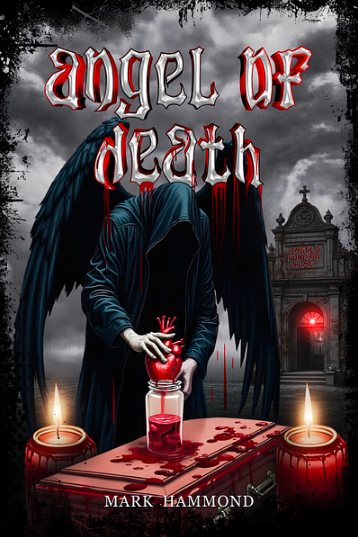
Mark E. Hammond’s Angel of Death explores themes of fear, guilt, faith, darkness, and mortality. These themes connect with psychological uncertainty in horror fiction, where characters may struggle with difficult choices, troubling perceptions, and an unclear understanding of danger.
For a related perspective on uncertainty and helplessness in horror, read How the Fear of Losing Control Shapes Modern Horror Stories
What to Watch For as a Reader
Next time you’re reading horror unreliable narrator fiction, pay attention to small inconsistencies instead of brushing past them. Writers rarely include contradictions by accident. If a detail feels wrong, it probably is. That’s usually the author signaling something you’re meant to question.
- Notice when the narrator explains too much, over-justifying small choices
- Watch for other characters reacting to things the narrator never mentioned
- Track timeline shifts that don’t quite add up
This kind of close reading changes how the whole book feels. You stop passively absorbing the story and start actively distrusting it, which is basically what a good unreliable narrator storytelling technique is built to trigger in the first place.
Final Thoughts
An unreliable narrator doesn’t need monsters or gore to unsettle you. Doesn’t even need a jump scare. It just needs to make you question the one thing you usually take for granted: that the person telling the story is being straight with you. Once that cracks, every page carries a little more doubt. And that doubt, more than anything else, is where the fear actually lives.
FAQs
An unreliable narrator creates fear by making readers question what is true. Contradictions, missing details, and distorted perceptions weaken trust in the story’s perspective. As uncertainty grows, readers may feel that they cannot accurately understand the threat or predict what will happen next.
You can identify an unreliable narrator through contradictions, memory gaps, biased explanations, and details that other characters dispute. Pay attention when the narrator’s account changes or when later events challenge information presented earlier in the story.
No. An unreliable narrator does not require a twist ending. The technique can work through gradual uncertainty, unresolved contradictions, and an incomplete understanding of events. Some stories leave readers questioning the narrator without providing a final explanation.