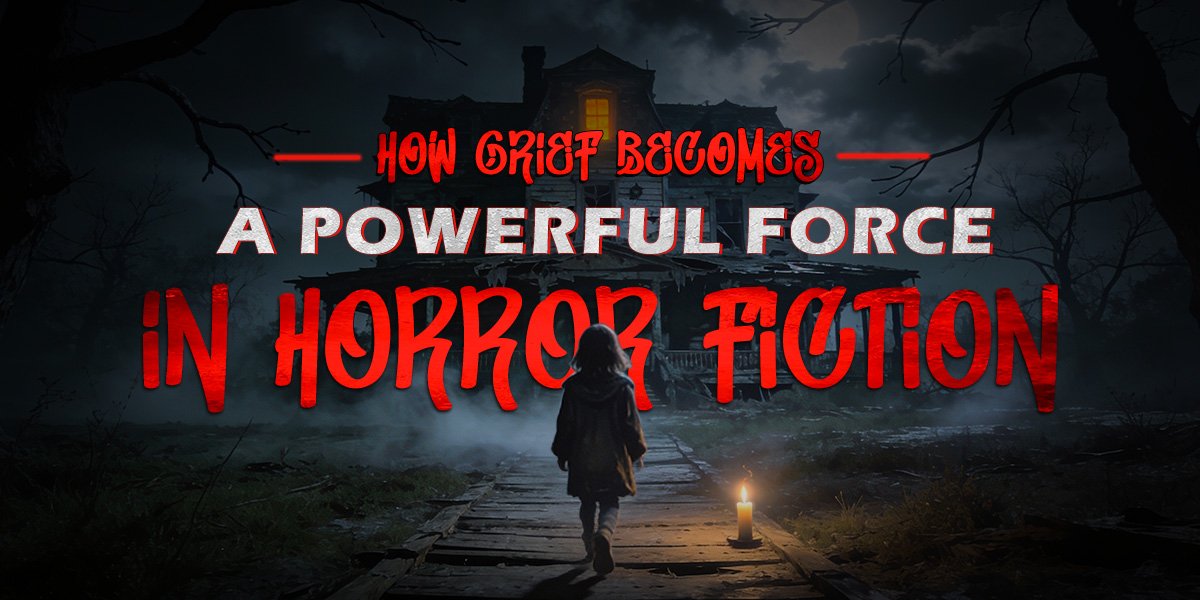
Grief and horror have more in common than most people realize. When a story builds its fear around loss and pain that never quite healed, it stops being just a scary read. It becomes something that follows you. Grief in horror works because it connects with readers on an emotional level, making fear feel more personal and unforgettable.
A report by Goodreads in 2023 says it has been seen that readership is demanding more for emotional horror with grief-based titles. And it’s consistently outperforming traditional horror in reader reviews. And it really makes sense when you think about it. Fear is easy to forget. Feeling understood is not.
Most people picture horror as the thing that makes them flinch. The creature under the bed. The shadow at the end of the hallway. Something moving when it shouldn’t be.
But if you’ve read enough of it, you start to notice something. The scariest stories don’t usually begin with a monster. They begin with a person who lost something and never really got over it. A parent replaying a moment they can’t change. A husband still makes two cups of coffee every morning without thinking. A family that stopped talking about something years ago and just… never started again.
The grief sits there. Quietly. And then everything else grows out of it.
Sometimes the Monster Isn’t the Point
We’ve all lost something. Not the same things, obviously, but enough to understand how loss gets into you and changes the way you move through the world.
Grief doesn’t end at the funeral. It shows up later, in strange places, at strange times. It changes the choices people make and what they’re willing to believe.
Horror takes that and asks a question most of us would rather avoid. What if grief doesn’t just stay inside a person? What if it becomes something you can’t control anymore?
That’s where these stories get genuinely interesting. The ghost, or the demon, or whatever is lurking in the walls, isn’t always the real problem. It’s just the form that fear takes when someone was already carrying too much before any of it started.
The Same Setting, a Completely Different Story
Imagine a haunted house.An old house. Darkness. A sound with no obvious explanation.
And then, picture that someone walks into that house because they are looking for a person they lost.
Same house, but not the same story.
In the second scene, you’re not just watching someone walking toward danger but someone is in pain and walking toward danger. This changes everything. Now you’re emotionally invested in the character’s journey.
Now you as a reader might think about sudden unexpected things jumping out. Instead, you start worrying about that person, holding a flashlight.
That’s why emotional horror tends to stay with people. The fear has something to attach to. It’s not just the atmosphere. It means something.
Grieving People Make Mistakes, and That’s the Whole Point
Nobody wants to read about a character who handles everything perfectly. It’s boring, and it doesn’t feel real.
Grieving characters miss things they should catch. They make choices that look irrational from the outside but make complete sense if you understand what they’ve been through. They chase answers that probably don’t exist because the alternative is accepting something they’re not ready to accept.
Those moments are what make horror actually work. Readers stop asking what happens next and start asking whether this person is going to be okay. That shift, from curiosity to genuine worry, is when a story has you properly.
The Scary Parts Are Usually the Quiet Ones
Fear and loss have always gone together, even outside of horror. The terror of losing someone, or of having already lost them and not knowing how to live with that, is one of the most universal feelings there is.
Grief-driven horror understands this. Characters make desperate choices. They refuse to let go when they obviously should. They start believing things that don’t make logical sense because the logical version of events is too painful to sit with.
And the horror builds slowly around all of that. The scariest moments in these books are rarely loud. They tend to arrive quietly, after chapters of emotional buildup, and hit much harder because of it.
Ordinary Things Stop Feeling Safe
This happens in both fiction and real life. A very strange thing grief does.
A strange smell. Handwriting on an old envelope A long-time unused kitchen table chair.
Things that used to feel comforting start scaring. Horror uses all these things naturally. The best grief-driven stories do not bring fear from outside. Instead they let it come from inside the character. How? through memory. Through the small ordinary things that suddenly obtain too much weight.
And then the reader starts wondering the thing the story wants them to wonder. Is this place haunted, or is grief just changing the way this person sees everything around them?
Sometimes the book answers that. Sometimes it doesn’t. The ambiguity is usually the scariest part.
Families and the Things They Don’t Say
Families hide things. Almost all of them do, in one way or another.
Horror loves this. A locked room. An old letter nobody was supposed to find. A name that gets avoided in conversation without anyone ever explaining why.
These details work because they feel familiar. Real families carry silence. Real families have subjects that are somehow off limits without anyone deciding they should be. Horror just asks what happens when that silence finally cracks open.
It builds a kind of dread that doesn’t need anything supernatural at all. The fear comes from recognition, and recognition is uncomfortable in a way that a ghost sometimes isn’t.
Why These Stories Stay With People
Readers don’t come back to horror just to be scared. If that’s all it was, the genre would be a lot simpler.
What people actually want is to feel something real. Fear, yes, but also the particular sadness of a story that understands loss, and occasionally the strange comfort of seeing your own pain living inside a character on a page.
That’s part of what makes Mark E. Hammond‘s Angel of Death is worth reading and one of the best mystery thriller books. It isn’t just a horror novel in the traditional sense. It sits with guilt and faith and the emotional weight of facing darkness that feels personal rather than abstract. The fear earns its place because the emotional groundwork is already there.
The ghost usually isn’t the story. The grief is. And that’s probably why these books follow you home.
Enjoyed reading about emotional horror? You might also like our earlier post, “Why Some Horror Endings Stay With Readers Forever.” Keep visiting Mark E Hammond to read more posts, touching more other aspects of horror fiction.
FAQs
It gives the fear somewhere real to come from. Readers connect with loss before anything frightening happens, which makes the horror feel personal.
No, Some use ghosts and spirits, others stay completely psychological. Both can work, and the emotional honesty behind the approach matters more than the approach itself.
Because fear tied to loss or guilt taps into things readers have actually felt. That familiarity makes it believable in a way that pure monster horror sometimes isn’t.
Readers were moved before they were frightened, and the two things got tangled together. That combination is hard to shake.