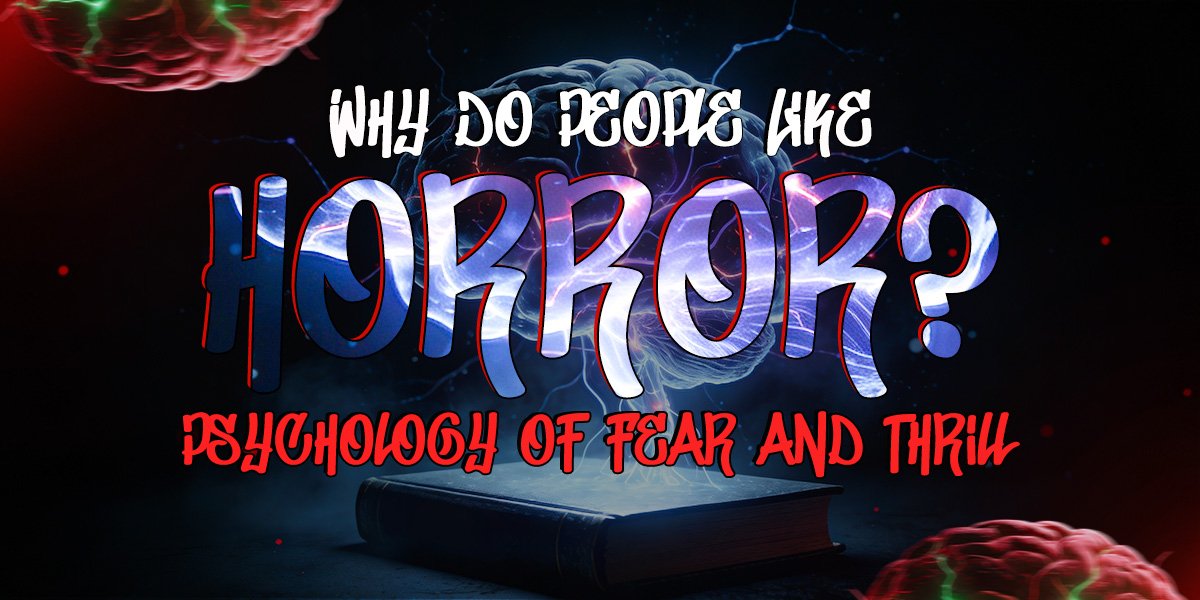
Horror is one of the most captivating genres —it makes people feel fear, yet they keep coming back for more.From movies and books to games and haunted attractions, horror attracts millions worldwide. But why do people like horror, something that causes fear, anxiety, and discomfort? This is a question of human psychology. When the fear is created in a managed situation, it can be thrilling, rewarding, and even healthy.
Why do people like horror?
People like horror because it allows them to experience fear, adrenaline, and excitement in a safe environment. It combines curiosity, emotional thrill, and psychological engagement without real danger.
The Science Behind Fear
Human fear instinct is a survival mechanism. When we encounter something frightening, the brain triggers a fight-or-flight response.This releases adrenaline, increases heart rate, and sharpens the senses.
In life-threatening situations, this assists us in surviving. But, in horror entertainment psychology, we do not really face the danger; thus, we can feel the physical impact of fear without facing the danger. This allows a very special tension and excitement.
Interestingly, the brain does not always distinguish between real and imagined fear. That’s why a jump scare can feel just as intense as a real-life shock—until the brain realizes we are safe, creating relief and even enjoyment.
The Thrill of Adrenaline
An adrenaline rush is one of the main reasons people like horror. Watching a scary movie or reading a horror story can feel like a roller coaster—intense, exciting, yet safe.
To others, horror is a form of adventure in which they get to have fear and excitement without necessarily risking anything. It provides a regulated means of experiencing strong emotions, and daily life is nothing compared to it.
Curiosity About the Unknown
Humans are naturally curious about the unknown in horror . Horror exploits this wonder by investigating the unknown like ghosts, monsters, supernatural powers, and psychological enigmas. These aspects question our perception of reality and compel us to speculate about what could be outside of it.
Such an interest is very innate in human nature. Although the unknown is threatening, the answer to the question of why horror attracts people is that it attracts us as well. The desire of people is to study dark topics and mysterious circumstances, as it is something different from ordinary life. Horror offers the opportunity to investigate these concepts without the actual effects.
The Appeal of Facing Fear
Another reason why do people like horror is the achievement that is associated with encountering fear. It may seem like conquering something difficult, to watch a scary movie or to read a scary book. It has an impression of boldness and strength.
This is particularly among individuals who love pushing themselves. They can watch horror to observe the extent of the fear that they can bear. Every experience gains confidence, and they feel more powerful and able to control their feelings.
Various Tempers, Various Responses
Not all people like horror, but that is quite natural. Individuals do not respond to fear in a similar manner depending on their personality, past experiences, and the level of tolerance. There are people who are thrill-seekers, and those who do not want to come into contact with the thrill of fear.
Studies indicate that individuals who love horror thrill psychology tend to be more tolerant of stress, or they like excitement. Conversely, the fearless might be more scared or less tolerant of horror or more relaxed types of entertainment. Neither response is right nor wrong; it is just a matter of personal choice.
The Imagination Role
The use of imagination, fear and thrill psychology is a strong aspect of horror, particularly in books and psychological thrillers. Written horror, in contrast to visual media, gives the reader an opportunity to develop his or her own variant of the fear in his or her mind. This may enhance the experience even further since the fear becomes more personal.
The human mind is strong, and horror exploits it to the utmost. We sometimes imagine things that are much more frightening than what is on the screen. That is why less obvious, psychological horror can be more effective in contrast to graphic or violent material.
Want to experience psychological fear and suspense firsthand? Explore Angel of Death by Mark E. Hammond—a gripping story filled with tension, mystery, and dark twists.
Conclusion
Horror is not something that people like because they like to be scared, but rather because of the feeling of being safe that they experience. This helps explain why do people like horror in the first place. It provides a combination of adrenaline, curiosity, emotional discharge, and suspense that keeps readers hooked.
Ultimately, the psychology behind horror tells us something significant about human nature; not only are we afraid of fear, but we are also fascinated by it.
FAQs:
1. Why do people enjoy being scared in movies?
People enjoy it because it provides excitement, fear and adrenaline while they remain safe from real danger.
2. Is liking horror a psychological trait?
Yes, it is often linked to personality traits like thrill-seeking and a higher tolerance for fear.
3. Can horror be beneficial for mental health?
In some cases, horror gives a safe fear experience that can help release stress and allow people to process emotions in a controlled way.
4. Why do some people avoid horror completely?
Some individuals are more sensitive to fear and prefer entertainment that feels calm and comforting.