You picture a tall, cloaked figure at the edge of a room. Somehow you already sense what it represents before anyone says a word. The angel of death has remained a powerful figure in storytelling because it confronts people with one of their deepest fears: the certainty of mortality.
Horror writers didn’t invent this figure. They drew on religious traditions, folklore, and cultural ideas that had given death a symbolic presence long before modern horror fiction emerged.
What Is the Angel of Death?
The Angel of Death is a figure associated with death, the departure of souls, or the transition from life to death in various religious traditions and folklore. Its identity and role differ across cultures, and the figure is not understood in exactly the same way in Judaism, Christianity, and Islam.
In horror fiction, the Angel of Death can become a symbol of mortality, judgment, or an approaching end. Writers may portray it as a supernatural being, a mysterious presence, or an image that reflects a character’s fear of death.
A Figure Older Than Most People Realize
You might assume the Angel of Death is a modern horror invention, but ideas about death and supernatural messengers appear in religious traditions and folklore across different periods. Angel of death mythology draws on these varied cultural beliefs, while Angel of Death in literature reflects how writers have adapted the figure to explore mortality, fear, and the unknown.
That history gives the figure a sense of cultural significance. Rather than feeling like just another fictional monster, the Angel of Death carries associations that have shaped stories and beliefs across generations.
What Does the Angel of Death Symbolize?
The Angel of Death can symbolize more than death alone. Depending on the story or tradition, it may represent mortality, judgment, inevitability, or the limits of human control.
Common symbolic associations include:
- Mortality and fear: the awareness that life has an end.
- Judgment and consequence: the idea that actions may carry moral or spiritual weight.
- Transition: the boundary between life and death.
- The unknown: uncertainty about what happens beyond life.
In horror fiction, writers can use these associations to make a character confront a difficult truth, an unresolved fear, or the consequences of a past decision.
Why Is the Angel of Death Scary?
Honestly, it’s not the wings or the robes. It’s the certainty. Many horror threats can be outrun, fought, or misunderstood long enough to give characters a chance to survive. But a figure associated with inevitable death creates a different kind of fear because escape may not be possible.
That’s what makes the angel of death figure different from a typical monster. A monster may be defeated, but this figure often represents something beyond physical danger: mortality, helplessness, and the limits of human control. Horror stories can use these ideas to create tension that goes beyond a frightening appearance.
The Fear of Death, Not Just the Figure Itself
A lot of this fear isn’t actually about the character on the page. It’s fear of death itself, something every reader already carries around whether they think about it daily or not. Writers don’t need to invent that dread from scratch. They just give it a shape. And this particular shape has centuries of cultural weight behind it, already built in.
The Angel of Death in Horror Fiction
Across angel of death stories, the figure tends to show up in one of two ways. Either as a direct supernatural entity, interacting with characters directly. Or as a symbolic presence, lingering at the edges of a plot, barely seen but somehow felt the whole way through.
| Portrayal Style | How It Functions | Reader |
| Direct supernatural figure | Appears physically or interacts with characters | Immediate dread, confrontation |
| Symbolic presence | Appears through dreams, omens, or recurring imagery | Slow-building unease |
| Judgment-based figure | Appears through dreams, omens, or recurring imagery | Fear mixed with self-reflection |
| Ambiguous presence | Leaves its identity or reality uncertain | Lingering doubt |
Writers pick between these depending on what kind of fear they’re going for. Direct confrontation hits fast, sure. But a symbolic version lingers, and lingering fear tends to stick with readers way longer than anything that wraps up quickly.
How Writers Use Death and Judgment to Create Fear
Effective horror can use the Angel of Death for more than a sudden scare. The figure may connect a character’s situation to guilt, difficult choices, or the consequences of past actions. This is where death and judgment can work together to create deeper tension.
A few techniques keep showing up:
- Tying the figure’s arrival to a specific guilt nobody’s resolved yet
- Letting the supernatural horror stay ambiguous until pretty late in the story
- Using religious or cultural symbolism associated with death and the afterlife.
- Withholding explanation, so the mysterious figure stays genuinely unknown the whole time
This connects to something worth noticing in horror more broadly, actually. If you’ve read about How Moral Choices Shape Horror Story Characters, you’ll recognize the pattern here. The scariest moments usually involve a character facing consequences they can’t avoid, and this figure is often just the mechanism that delivers them.
The Angel of Death in Modern Horror
In modern horror fiction, the Angel of Death can serve as more than a religious figure. Writers may use it to represent mortality, unresolved guilt, inevitable consequences, or fear of the unknown. Depending on the story, it can appear as a supernatural presence or serve as a symbol of the fears and conflicts characters face.
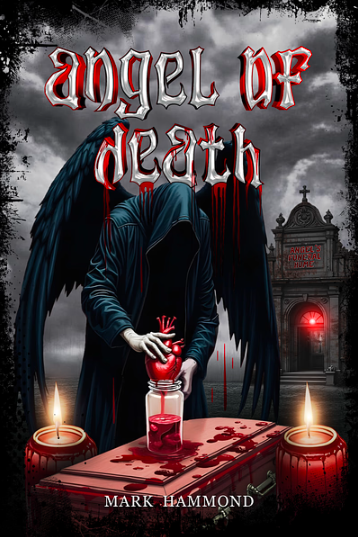
Angel of Death by Mark E. Hammond
Mark E. Hammond, author of Angel of Death, brings the title’s dark themes into a horror story shaped by fear, guilt, faith, and mortality. The book offers a relevant connection to the broader symbolism of death in horror fiction, where spiritual questions and human fears can add meaning beyond the supernatural threat itself.
Horror writers can also use uncertainty about what characters see or believe to deepen psychological tension. How Unreliable Narrators Make Horror Stories More Unpredictable examines this technique in greater detail.
FAQs
Mostly judgment, inevitability, the point where human control just stops mattering. Rather than symbolizing death alone, this figure usually ties mortality to some kind of reckoning or consequence left unresolved.
It carries centuries of religious and cultural weight already baked in, so writers don’t need to build menace from scratch. That built-in authority works without needing much backstory at all.
Not always. It’s often symbolic, showing up through omens, dreams, and recurring imagery rather than as an actual physical figure. That ambiguity tends to make the fear linger longer than a direct confrontation would.